
Choosing the right cooking oil is an important decision for every Indian household. From traditional Bengali fish curries and mustard-flavoured vegetables to everyday dal, sabzi, and fried snacks, cooking oil influences the taste, texture and nutritional composition of our meals.
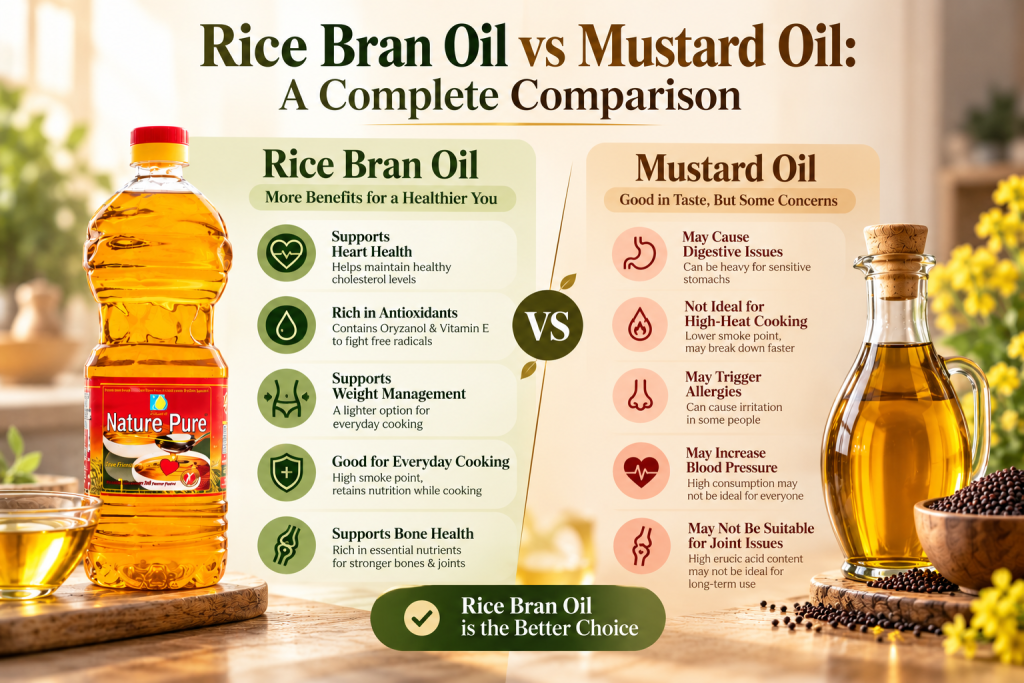
Two popular choices in Indian kitchens are Rice Bran Oil and Mustard Oil. Both have distinctive nutritional properties, different flavours and their own cooking applications. But when it comes to everyday use, which one should you choose?
The comparison of Rice Bran Oil vs Mustard Oil is not simply about deciding which oil is healthier. It is about understanding their fatty acid profiles, nutritional components, cooking characteristics and suitability for your family’s food habits.
In this guide, we compare both oils to help you make a more informed decision and understand why Rice Bran Oil is an option worth exploring for everyday cooking.
What Is Rice Bran Oil?
Rice Bran Oil is extracted from the outer layer of rice grains, known as rice bran, which is separated during the rice milling process.
It contains a combination of saturated, monounsaturated and polyunsaturated fatty acids. It also naturally contains compounds such as gamma-oryzanol, phytosterols, tocopherols and tocotrienols.
One of its key characteristics is its mild flavour. This makes Rice Bran Oil suitable for different cooking styles without significantly changing the natural taste of ingredients.
Its nutritional composition and versatility have made it an increasingly recognised option for consumers looking for a Healthy Cooking Oil for everyday meals.
What Is Mustard Oil?
Mustard Oil is obtained from mustard seeds and is widely used in Indian cooking, especially in eastern and northern parts of the country.
It is recognised for its strong aroma, distinctive flavour and characteristic pungency. Mustard Oil is commonly used for preparing fish curries, pickles, vegetable dishes, marinades and traditional recipes.
Its fatty acid composition is different from Rice Bran Oil. Mustard Oil generally contains a high proportion of monounsaturated fats and can provide alpha-linolenic acid (ALA), an omega-3 fatty acid.
However, traditional mustard oil can also contain significant erucic acid. Its concentration varies according to the mustard variety and product. Consumers should therefore check product specifications and applicable food standards.
Rice Bran Oil vs Mustard Oil: Key Differences
Let’s understand the major differences between these two cooking oils.
| Comparison factor | Rice Bran Oil | Mustard Oil |
|---|---|---|
| Source | Outer layer of rice grains | Mustard seeds |
| Flavour | Mild and relatively neutral | Strong and pungent |
| MUFA and PUFA | Contains both | Contains both |
| Notable compounds | Gamma-oryzanol, phytosterols, vitamin E-related compounds | ALA, other fatty acids and seed-derived compounds |
| Cooking applications | Curries, sautéing, stir-frying and selected frying uses | Traditional curries, pickles, marinades and regional recipes |
| Aroma | Generally mild | Distinctive and strong |
| Everyday versatility | Suitable for many flavour profiles | Especially suited to recipes where mustard flavour is desired |
Important: Nutritional values vary by seed or rice variety, processing method and brand. Always compare the actual product labels rather than assuming every oil has an identical composition.
1. Fatty Acid Composition: Understanding the Nutritional Difference
The fatty acid profile is one of the most important factors when comparing cooking oils.
Rice Bran Oil contains monounsaturated fats (MUFA), polyunsaturated fats (PUFA) and saturated fats. Mustard Oil is also rich in unsaturated fats, including monounsaturated fats and alpha-linolenic acid.
Research examining edible oils consumed in India has found that each oil has its own fatty acid profile. This means that neither oil should be judged using just one nutritional number.
The practical takeaway is to consider the complete fatty acid composition, the type of oil being replaced and your overall dietary pattern.
Replacing some saturated fats with unsaturated fats can support healthier blood cholesterol levels as part of a balanced diet.
2. Gamma-Oryzanol: A Distinctive Feature of Rice Bran Oil
One of the best-known components of Rice Bran Oil is gamma-oryzanol.
Gamma-oryzanol is a group of naturally occurring compounds found in rice bran and Rice Bran Oil. Researchers have studied these compounds for their antioxidant properties and potential nutritional roles.
Rice Bran Oil also contains phytosterols and vitamin E-related compounds, including tocopherols and tocotrienols.
Mustard Oil has a different nutritional profile and does not share the same characteristic gamma-oryzanol content as Rice Bran Oil.
This makes gamma-oryzanol an important point of difference when comparing the two oils. However, its presence does not mean Rice Bran Oil can prevent or treat any disease.
3. Taste and Flavour: Which Oil Suits Indian Cooking Better?
Taste is a major consideration when selecting cooking oil.
Rice Bran Oil: Its mild flavour allows spices and other ingredients to remain prominent. It can be useful for households that prepare different regional cuisines and prefer an oil that does not dominate the dish.
Mustard Oil: Its strong aroma and pungent flavour are important parts of many traditional Indian recipes. It is particularly popular in Bengali fish preparations, pickles and mustard-based dishes.
For example, if you are preparing shorshe maach, mustard oil contributes a distinctive traditional flavour. For a vegetable stir-fry or a dish where you want the spices to stand out without a strong oil aroma, Rice Bran Oil may be a practical alternative.
The better choice depends on the recipe and your family’s taste preferences.
4. Cooking Performance and Everyday Usage
Both oils can be used in different cooking applications, but their performance depends on product quality, processing, temperature and cooking technique.
Rice Bran Oil is commonly used for sautéing, curries, stir-frying and selected frying applications. Its relatively mild flavour makes it versatile for different dishes.
Mustard Oil is widely used for traditional cooking, tempering, marinades and recipes where its characteristic flavour is desired.
When selecting an oil for frying, do not consider smoke point as the only measure of quality. Avoid overheating oil and do not repeatedly reuse oil that has become dark, smoky, thick or unpleasant in smell.
5. Rice Bran Oil vs Mustard Oil for Heart-Conscious Eating
Many consumers compare cooking oils because they want to make better dietary choices for long-term health. Both Rice Bran Oil and Mustard Oil contain unsaturated fats, but their fatty acid compositions are different.
Rice Bran Oil is recognised for its combination of fatty acids and naturally occurring gamma-oryzanol. Mustard Oil is known for its high monounsaturated fat content and ALA.
Replacing some saturated fats with unsaturated fats can be beneficial for blood cholesterol levels. However, the right choice depends on the overall dietary pattern, quantity consumed and individual nutritional needs.
No single cooking oil can independently guarantee better heart health.
6. Rice Bran Oil for Diabetes: Is It a Suitable Choice?
People managing diabetes often search for Rice Bran Oil for Diabetes because they want to understand whether changing their cooking oil can improve their diet.
Rice Bran Oil does not directly lower blood glucose or cure diabetes. Like other cooking oils, it is primarily a source of fat and provides calories.
However, the type and quantity of fat consumed can be important parts of an overall diabetes-friendly eating pattern.
For people managing diabetes, useful habits include:
- Choose cooking oils with a suitable unsaturated fat profile.
- Measure oil quantities rather than using them excessively.
- Include vegetables, pulses, whole grains and fibre-rich foods.
- Limit frequent consumption of deep-fried and highly processed foods.
- Follow individual dietary advice from a qualified healthcare professional.
Rice Bran Oil can be considered as one cooking oil option, but people with diabetes should make dietary decisions based on their complete nutritional needs and medical advice.
7. Which Is the Best Cooking Oil for Daily Use?
There is no single cooking oil that is best for every person or every Indian kitchen.
Rice Bran Oil may be suitable for families who prefer a mild-flavoured, versatile oil for different recipes. Mustard Oil may be preferable for people who enjoy its traditional flavour and want it for specific regional preparations.
Before choosing your everyday cooking oil, consider:
- Nutritional profile: Compare the saturated and unsaturated fat content.
- Cooking requirements: Choose an oil that suits your regular recipes.
- Taste preference: Consider whether you prefer mild or strong flavours.
- Product quality: Check the label, manufacturing details and packaging.
- Quantity: Use cooking oil in moderation, regardless of its type.
For some households, using different oils for different recipes may be a practical way to enjoy varied flavours and fatty acid sources, while keeping total oil consumption moderate.
How to Choose a Premium Rice Bran Oil Brand in India
If you are considering switching to Rice Bran Oil, selecting a reliable brand is just as important as understanding its nutritional properties.
When looking for a Premium Rice Bran Oil Brand in India, check the following:
- Clear ingredient and nutritional information.
- Proper manufacturing and batch details.
- Sealed, undamaged packaging.
- Accurate best-before and storage information.
- Appropriate food safety and quality documentation.
- Transparent product specifications and customer support.
A trustworthy Rice Bran Oil Company should communicate its product information clearly and avoid exaggerated health claims.
Nature Pure Rice Bran Oil is an option for consumers who want to explore Rice Bran Oil for everyday cooking. Visit the official website to check the current product range, packaging details and availability.
Why Consider Nature Pure Rice Bran Oil?
Choosing an everyday cooking oil should be a thoughtful decision based on nutritional information, quality and your family’s cooking preferences.
Nature Pure Rice Bran Oil offers a product option for households looking for a mild-flavoured oil suitable for a variety of everyday recipes.
Whether you are preparing vegetables, curries, dal or stir-fried dishes, Rice Bran Oil can be considered as part of a balanced cooking routine.
Explore the available Nature Pure products and review their current packaging and nutritional details before making your purchase.
Explore Nature Pure Rice Bran Oil: https://naturepure.co.in/
Frequently Asked Questions (FAQs)
1. Which is better, Rice Bran Oil or Mustard Oil?
Both oils have different nutritional compositions and cooking characteristics. Rice Bran Oil contains gamma-oryzanol and has a mild flavour, while Mustard Oil is rich in monounsaturated fats and provides ALA. The right choice depends on your cooking habits and nutritional needs.
2. Is Rice Bran Oil healthier than Mustard Oil?
Neither oil is automatically healthier for everyone. Both contain unsaturated fats, but their fatty acid profiles differ. Compare product specifications and consider your overall diet before choosing.
3. Can I use Rice Bran Oil for everyday cooking?
Yes. Rice Bran Oil can be used for a variety of everyday cooking methods, including sautéing, curries and stir-frying. Follow the manufacturer’s instructions for temperature and usage.
4. Is Rice Bran Oil suitable for people with diabetes?
Rice Bran Oil does not directly control blood sugar or treat diabetes. It can be included in a balanced diet, but people with diabetes should monitor total fat and calorie intake and follow professional dietary guidance.
5. Does Rice Bran Oil contain gamma-oryzanol?
Yes. Gamma-oryzanol is a naturally occurring group of compounds associated with Rice Bran Oil. Its concentration varies depending on the raw material and processing method.
6. Can I use Rice Bran Oil and Mustard Oil in the same kitchen?
Yes. You can choose different oils for different recipes based on flavour, cooking requirements and nutritional preferences. Keep overall oil consumption moderate and store each oil correctly.
Final Thoughts: Rice Bran Oil or Mustard Oil – Which Should You Choose?
The comparison of Rice Bran Oil vs Mustard Oil shows that both oils have their own nutritional characteristics and culinary advantages.
Rice Bran Oil offers a mild flavour, a combination of unsaturated fatty acids and naturally occurring gamma-oryzanol. Mustard Oil provides a distinctive flavour and a different fatty acid profile, including monounsaturated fats and ALA.
If you prefer a versatile, mild-flavoured oil for different everyday recipes, Rice Bran Oil is worth considering. If you enjoy traditional mustard flavour, Mustard Oil can continue to play a role in your kitchen.
Ultimately, the smartest choice is to understand your cooking oil, read its nutritional label, use it in moderation and maintain a balanced diet.
Nature Pure Rice Bran Oil – A Thoughtful Choice for Everyday Cooking.
