
Can healthy food really taste delicious? Absolutely! Healthy cooking does not mean giving up your favourite flavours, traditional recipes or satisfying meals. With the right ingredients, smart cooking techniques and a suitable cooking oil, you can prepare delicious dishes while making more mindful food choices.
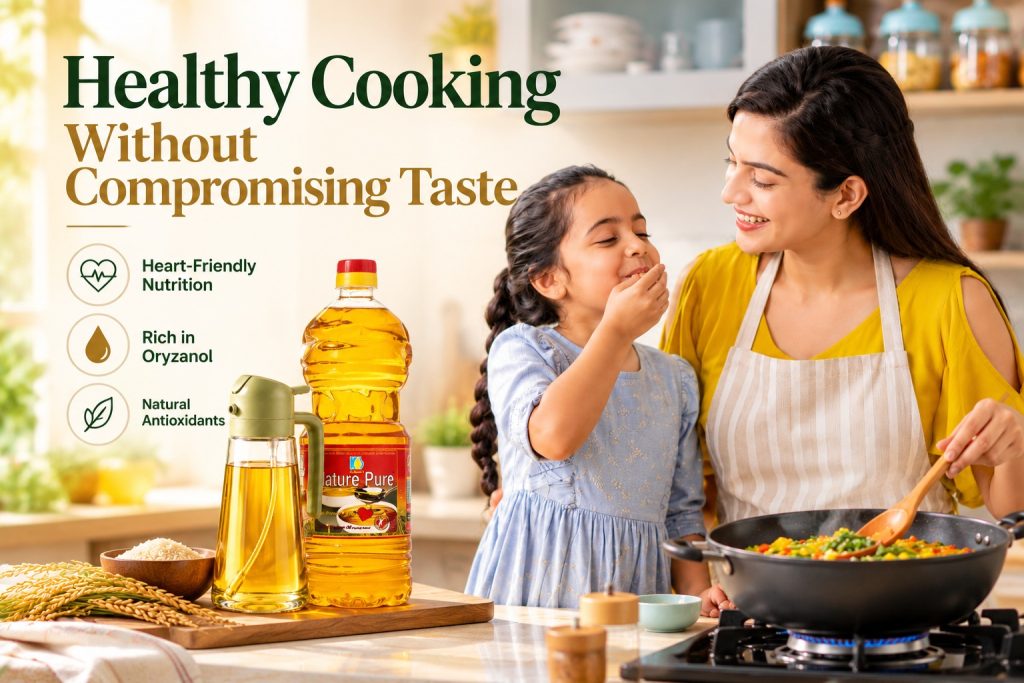
In Indian kitchens, cooking oil plays an important role in everything from aromatic tadkas and vegetable curries to crispy snacks and festive dishes. However, choosing a Healthy Cooking Oil is not just about following trends. It is about understanding the nutritional properties of different oils, using them in appropriate quantities and selecting an option that suits your cooking habits.
Rice Bran Oil has become an interesting choice for consumers looking for a versatile cooking oil. It contains a combination of unsaturated fats and naturally occurring compounds such as Gamma Oryzanol and Vitamin E-related compounds.
In this guide, discover how to enjoy healthy cooking without compromising taste, how to choose the right oil and why Nature Pure Rice Bran Oil may be worth considering for your everyday kitchen.
1. What Does Healthy Cooking Really Mean?
Healthy cooking is about preparing balanced, flavourful meals while being mindful of ingredients, cooking methods and portion sizes. You do not have to remove every favourite dish from your menu. Instead, small changes can make everyday meals more balanced.
Here are some practical ways to get started:
- Use a measured amount of cooking oil instead of pouring freely.
- Include vegetables, pulses, whole grains and other nutrient-rich foods.
- Experiment with herbs, spices, ginger, garlic and lemon to enhance flavour.
- Choose cooking methods such as sautéing, steaming, grilling and baking when suitable.
- Keep deep-fried foods as an occasional choice rather than the foundation of every meal.
A balanced approach allows you to enjoy the foods you love while developing sustainable eating habits.
2. Why Choosing the Right Healthy Cooking Oil Matters
Cooking oil contributes to the overall fat composition and energy content of your meals. Different oils have different proportions of saturated, monounsaturated and polyunsaturated fats.
Replacing some saturated fats with unsaturated fats can help improve blood cholesterol levels. This is one reason nutrition guidance often focuses on the type of fat used, rather than simply labelling a food as healthy or unhealthy.
When comparing oils, consider:
- Fatty acid composition: Understand the balance of saturated and unsaturated fats.
- Cooking suitability: Choose an oil appropriate for the temperature and cooking method.
- Product quality: Read the label, nutritional information and storage instructions.
- Quantity used: Even oils rich in unsaturated fats contribute calories.
- Taste and versatility: Select an oil that works well with your regular recipes.
There is no single oil that is automatically the best for every person or every dish. The overall diet and the way an oil is used matter just as much as the product choice.
3. Rice Bran Oil: A Versatile Option for Everyday Cooking
Rice Bran Oil is extracted from the bran, the outer layer of rice grains. It contains a combination of monounsaturated and polyunsaturated fatty acids, along with naturally occurring compounds associated with rice bran.
These include Gamma Oryzanol, phytosterols and Vitamin E-related compounds. Their levels can vary depending on the raw material and processing method.
Rice Bran Oil is used in a variety of cooking applications, making it a practical option for households looking for versatility.
You can consider it for:
- Preparing everyday sabzi and vegetable dishes.
- Cooking dal, curries and traditional meals.
- Sautéing vegetables and stir-frying ingredients.
- Preparing selected shallow-fried dishes.
- Making fried snacks when the product is suitable for that use.
The key is to select a quality product, follow the manufacturer’s instructions and use the oil in moderation.
4. How Rice Bran Oil Helps You Balance Nutrition and Taste
A good cooking oil should fit into your everyday routine without making meal preparation complicated.
Rice Bran Oil has a relatively neutral flavour profile in many formulations, which can allow the taste of spices, vegetables and other ingredients to remain prominent. The exact flavour depends on the product and processing.
Here are three aspects worth considering.
A combination of unsaturated fats
Rice Bran Oil contains monounsaturated and polyunsaturated fats. Using oils with more unsaturated fats in place of some saturated-fat sources can form part of a heart-conscious dietary pattern.
Naturally occurring Gamma Oryzanol
Gamma Oryzanol is a group of compounds naturally associated with rice bran oil. Researchers have studied its antioxidant properties and potential effects on blood lipid measures. These findings do not mean that every commercial oil guarantees a specific health outcome.
Versatile cooking applications
Depending on its specifications, Rice Bran Oil may be suitable for several cooking methods. This versatility can help you prepare a range of familiar dishes using an oil that fits your kitchen needs.
Remember, nutritional quality depends on the complete meal. Vegetables, pulses, whole grains, protein sources and portion sizes all play important roles.
5. How to Choose the Best Cooking Oil for Heart Health
People frequently search online for the best cooking oil for heart health. However, there is no universal winner because different oils have different nutritional profiles, and individual dietary needs vary.
When choosing a Heart Healthy Cooking Oil, focus on the following factors.
Look at the type of fat
Oils containing more unsaturated fats can be useful alternatives to fats high in saturated fatty acids. The benefit is greatest when unsaturated fats replace saturated fats rather than simply adding extra oil to the diet.
Consider your everyday recipes
An oil should be suitable for your cooking style. You may need different properties for a light sauté, a traditional curry or a fried preparation.
Avoid excessive heating
Do not heat oil until it smokes. Repeatedly reheating and reusing frying oil can degrade its quality, so avoid making this a regular practice.
Use oil in moderation
Even a suitable cooking oil is energy-dense. Measuring the quantity used is a simple way to manage overall intake.
Look at the complete diet
Heart-conscious eating also includes vegetables, fruits, whole grains, pulses, nuts and seeds, along with appropriate physical activity and other healthy habits.
Rice Bran Oil can be one option in this approach, but no cooking oil can independently prevent or treat cardiovascular disease.
6. Refined Oil Explained: What Should You Know?
The term Refined Oil refers to oil that has undergone processing to achieve particular characteristics, such as a suitable colour, odour, flavour and stability.
Depending on the oil and process, refining may involve stages such as degumming, neutralisation, bleaching and deodorisation. The specific process varies between manufacturers and products.
Refining can improve certain quality characteristics, but it can also affect some naturally occurring minor compounds. Therefore, the word “refined” alone does not tell you everything about an oil’s nutritional profile.
Before purchasing refined cooking oil, check:
- The product’s ingredient and nutrition labels.
- The manufacturer’s information about processing and quality.
- Applicable food-safety and labelling details.
- The recommended storage conditions and best-before date.
A sensible purchase decision should be based on verified product information rather than assuming that every refined oil has identical properties.
7. Simple Healthy Cooking Tips That Preserve Flavour
You can improve your cooking habits without making your meals bland or difficult to prepare.
Use spices creatively
Cumin, coriander, turmeric, pepper, ginger, garlic and fresh herbs can bring depth to dishes without requiring excessive oil.
Measure your cooking oil
Use a spoon or measuring tool when preparing everyday meals. This helps you manage quantities while keeping enough oil for the recipe’s texture and flavour.
Choose the right cooking method
Sautéing, steaming, grilling and baking can help reduce reliance on deep-frying. For some dishes, a small amount of oil is enough to develop aroma and improve texture.
Build meals around whole foods
Combine vegetables, pulses, whole grains and suitable protein sources. A varied meal can be satisfying without depending on excessive oil.
Store oil correctly
Keep the container closed and follow the label’s storage guidance. Protecting oil from excessive heat, light and air can help maintain its quality.
Avoid repeatedly reusing frying oil
Oil that has been heated repeatedly can deteriorate. Discard oil that shows signs of degradation, and follow appropriate food-safety practices.
These small steps can help you maintain flavour while making everyday cooking more mindful.
8. Why Choose Nature Pure Rice Bran Oil?
Choosing a cooking oil becomes easier when the product information is clear and the pack suits your kitchen requirements.
Nature Pure Rice Bran Oil offers an option for consumers looking for a versatile oil for everyday household or commercial cooking.
When considering Nature Pure, check the current product label and official specifications for details about its processing, nutritional information, pack size and recommended uses.
If you are searching for a Healthy Cooking Rice Bran Oil manufacturer, look for a manufacturer that provides transparent product information, appropriate food-safety details and clear labelling. These factors help you make a more informed decision.
Whether you are preparing everyday family meals or cooking in a larger kitchen, choose the pack size that matches your usage and store it as recommended.
The goal is simple: combine suitable product selection with balanced meals and sensible cooking habits.
9. Healthy Cooking Does Not Mean Giving Up Your Favourite Foods
One common misconception is that healthy eating requires removing every fried snack, traditional curry or favourite family recipe.
In reality, sustainable eating habits are often built through small, consistent changes.
You can enjoy familiar dishes while adjusting the way you prepare them. Use measured oil, add more vegetables, experiment with different cooking techniques and keep heavily fried foods in moderation.
For example, you can prepare a flavourful vegetable stir-fry with a measured amount of oil, make a balanced dal with a simple tadka or bake certain snacks instead of deep-frying them.
These choices do not require you to sacrifice flavour. They help you approach everyday food more thoughtfully.
Conclusion: Enjoy Great Taste with Smarter Cooking Choices
Healthy cooking and delicious food can go hand in hand. By choosing a suitable Healthy Cooking Oil, using appropriate quantities and exploring practical cooking techniques, you can prepare meals that are both enjoyable and balanced.
Rice Bran Oil is one option worth considering because it contains unsaturated fats and naturally occurring compounds such as Gamma Oryzanol and Vitamin E-related compounds. However, the best choice depends on your dietary needs, the oil’s verified specifications and how you use it.
With Nature Pure Rice Bran Oil, review the current product information and choose a pack suited to your everyday cooking routine.
Better cooking is not about compromising taste. It is about making informed choices, enjoying balanced meals and building healthier habits one dish at a time.
Frequently Asked Questions (FAQs)
1. What is the best Healthy Cooking Oil for everyday meals?
There is no single best oil for everyone. Compare the fatty acid composition, product quality, cooking requirements and your overall dietary needs before choosing.
2. Is Rice Bran Oil a Heart Healthy Cooking Oil?
Rice Bran Oil contains unsaturated fats and can fit into a heart-conscious dietary pattern. Its benefits depend on the overall diet and what fats it replaces. It is not a treatment for heart disease.
3. Is Refined Oil suitable for everyday cooking?
Suitability depends on the oil, its specifications and the intended cooking method. Check the product label and use the oil in moderation.
4. Can I use Rice Bran Oil for frying?
Depending on the product specifications, Rice Bran Oil can be used for different cooking applications, including some frying methods. Avoid overheating or repeatedly reusing frying oil.
5. How do I choose the best cooking oil for heart health?
Look at the type of fat, select an appropriate product, limit excessive oil consumption and maintain a balanced diet. Consider professional dietary advice if you have specific health requirements.
6. Does healthy cooking mean avoiding oil completely?
No. Cooking oils provide fats and energy, and some contain essential fatty acids. The important factors are the type of oil, the amount used and the overall quality of your diet.
7. What should I look for in a Healthy Cooking Rice Bran Oil manufacturer?
Look for clear nutritional labelling, verifiable manufacturer details, applicable food-safety information, appropriate packaging and transparent product specifications.
