
Choosing the right cooking oil is an important part of everyday healthy eating. From preparing traditional Indian curries and sautéed vegetables to frying snacks and cooking family meals, the oil you use contributes to the overall nutritional quality of your diet.
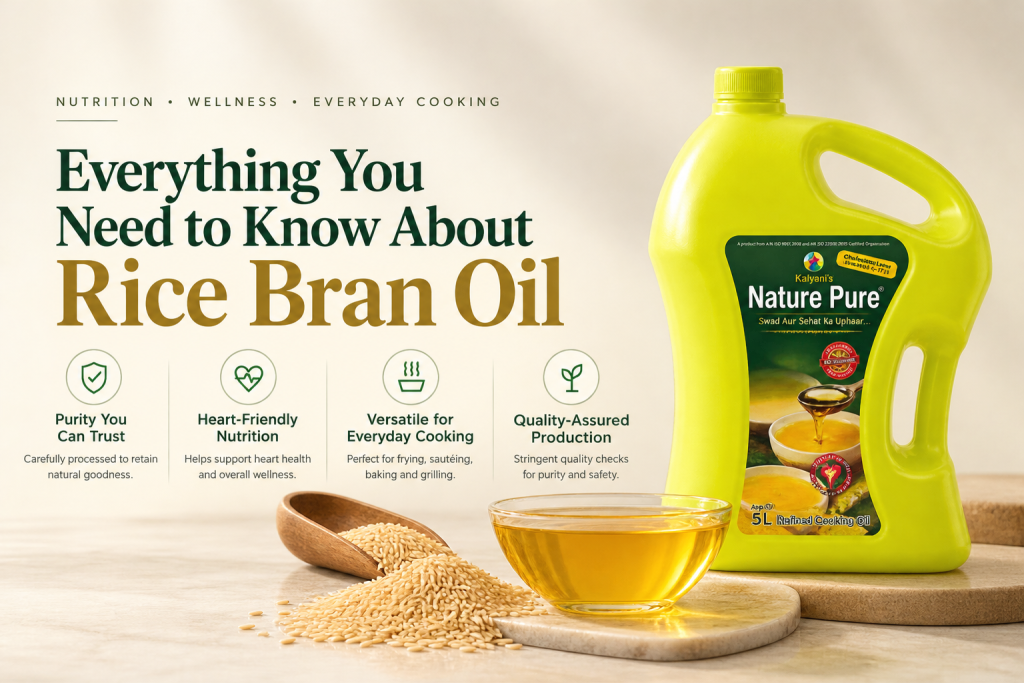
One cooking oil that has attracted growing interest is Rice Bran Oil. Extracted from the outer bran layer of rice, this vegetable oil contains a combination of unsaturated fatty acids and naturally occurring compounds such as Gamma Oryzanol and Vitamin E-related compounds.
But what exactly is rice bran oil? What are its potential health benefits, how can you use it in everyday cooking, and what should you check before buying it?
In this guide, we cover everything you need to know about Rice Bran Oil to help you make an informed choice for your kitchen.
What Is Rice Bran Oil?
Rice Bran Oil is a vegetable cooking oil extracted from the bran of rice grains. Rice bran is the nutrient-rich outer layer separated during rice milling.
This layer contains naturally occurring oils, fatty acids, phytosterols, Gamma Oryzanol and Vitamin E compounds. After extraction and appropriate processing, the oil can be prepared for use as an edible cooking oil.
Rice Bran Oil is used in various cuisines because of its versatile cooking applications and characteristic fatty acid composition.
Unlike oils that are particularly high in saturated fats, rice bran oil contains a mixture of monounsaturated and polyunsaturated fats. Its exact nutritional composition depends on the rice bran source, processing method and final product.
In simple terms: Rice Bran Oil is a versatile vegetable oil that can be considered as part of a balanced diet when used in appropriate quantities.
Rice Bran Oil Nutrition: What Does It Contain?
Understanding the nutritional composition of an oil helps you compare different options more effectively.
Here are some important components associated with Rice Bran Oil.
1. Monounsaturated Fatty Acids (MUFA)
Monounsaturated fats are unsaturated fats found in several plant-based oils. Replacing some saturated fats with unsaturated fats can help improve blood cholesterol levels.
Rice Bran Oil contains MUFA, making it one option for people looking to include unsaturated fats in their everyday cooking.
2. Polyunsaturated Fatty Acids (PUFA)
Rice Bran Oil also contains polyunsaturated fats. Certain polyunsaturated fatty acids are essential because the body cannot produce them in sufficient amounts and must obtain them from food.
The balance between different fatty acids varies across cooking oils, so checking the nutritional information can help when comparing products.
3. Gamma Oryzanol
Gamma Oryzanol is a group of naturally occurring compounds associated with rice bran oil. It has received scientific attention for its antioxidant properties and potential effects on lipid metabolism.
The concentration of Gamma Oryzanol can vary according to the oil and its processing.
4. Vitamin E Compounds
Rice Bran Oil contains Vitamin E-related compounds, including tocopherols and tocotrienols. These compounds have antioxidant functions in the body.
The amounts present in the finished oil depend on its processing and formulation.
5. Phytosterols and Other Compounds
Rice bran oil may contain phytosterols and other minor compounds naturally present in rice bran. These contribute to the oil’s distinctive nutritional profile.
Remember that an oil’s composition does not tell the whole story of a person’s diet. A variety of foods, appropriate portions and balanced eating habits remain essential.
7 Potential Rice Bran Oil Benefits
Rice Bran Oil is often discussed because of its combination of unsaturated fats and naturally occurring compounds. Here are seven points worth understanding.
1. Provides Unsaturated Fats
One of the key Rice Bran Oil benefits is its combination of monounsaturated and polyunsaturated fats.
Replacing some saturated fats with unsaturated fats can support healthier blood cholesterol levels. The benefit depends on the overall dietary pattern and which fats are being replaced.
2. Contains Naturally Occurring Gamma Oryzanol
Gamma Oryzanol is among the most recognised compounds associated with rice bran oil.
Researchers have studied its antioxidant activity and possible relationship with blood lipid levels. However, research on a compound does not automatically establish a guaranteed health benefit from every commercial oil.
3. Provides Vitamin E-Related Compounds
Rice Bran Oil naturally contains Vitamin E-related compounds that perform antioxidant functions.
However, the actual nutritional contribution depends on the finished product. Rice Bran Oil should not be treated as a replacement for a varied diet containing nuts, seeds, vegetables and other nutrient-rich foods.
4. Can Fit into a Heart-Conscious Eating Pattern
The type of fat consumed matters for cardiovascular health. Replacing some saturated fats with unsaturated fats is an established dietary approach for improving blood cholesterol levels.
Rice Bran Oil can be one option within this approach, alongside other suitable vegetable oils.
It is not a medicine and cannot independently prevent or treat heart disease.
5. Offers Versatile Cooking Applications
Rice Bran Oil can be used in different recipes, depending on the product’s specifications.
Its versatility makes it an option for households preparing everyday Indian meals, including vegetables, curries, sautéed dishes and selected fried preparations.
6. Can Be Considered for Different Cooking Styles
Some rice bran oils have a relatively high smoke point, making them suitable for various cooking applications.
However, the exact smoke point depends on the product and its condition. Avoid heating any cooking oil until it smokes, and do not repeatedly reuse frying oil.
7. Supports Flexible Meal Planning
There is no need to depend on one cooking oil for every recipe or nutritional purpose.
Rice Bran Oil can be included in a varied diet alongside other suitable oils, nuts, seeds and whole foods. The overall balance of the diet matters more than relying on one ingredient alone.
Rice Bran Oil for Everyday Indian Cooking
Indian cooking includes a wide variety of preparation methods, from slow-cooked curries to sautéed vegetables and occasional fried snacks.
Rice Bran Oil can be considered for several of these applications, provided the product is appropriate for the intended cooking method.
Common uses include:
- Sabzi and vegetables: For sautéing seasonal vegetables and preparing everyday side dishes.
- Dal and curries: For tempering spices and cooking home-style meals.
- Stir-fries: For quick cooking over controlled heat.
- Shallow frying: For suitable snacks and selected preparations.
- Deep frying: Where the product specifications support the intended use, while avoiding excessive heating and repeated reuse.
For a balanced cooking routine, try steaming, grilling, baking or sautéing where appropriate instead of relying on deep-frying for every meal.
Rice Bran Oil vs Other Cooking Oils
Different cooking oils have different nutritional profiles. The best choice depends on your dietary needs, recipe, budget and personal preferences.
| Cooking oil | General characteristics |
|---|---|
| Rice Bran Oil | Contains MUFA, PUFA, Gamma Oryzanol and Vitamin E-related compounds |
| Mustard Oil | Contains a mixture of monounsaturated and polyunsaturated fats; composition varies |
| Sunflower Oil | Generally rich in polyunsaturated fats, depending on the variety |
| Groundnut Oil | Contains monounsaturated and polyunsaturated fats |
| Olive Oil | Contains monounsaturated fats, with extra virgin varieties also providing various minor compounds |
These are general characteristics, not a ranking of which oil is healthiest. Fatty acid composition and minor compounds vary by variety, brand and processing.
A practical approach is to choose a quality oil that suits your cooking requirements and use it in moderation.
How to Choose a Good Quality Rice Bran Oil
When buying Rice Bran Oil, look beyond promotional statements. These practical checks can help you make a more informed decision.
Read the Product Label
Check the ingredient information, nutritional panel, storage instructions, batch details and best-before date.
Understand the Processing Method
If the product is labelled physically refined, refer to the manufacturer’s specifications for details about processing and quality. Refining methods can affect the levels of naturally occurring minor compounds.
Check Food-Safety Information
Choose a product with clear manufacturer details, appropriate labelling and applicable food-safety information.
Select a Suitable Pack Size
Smaller packs may be practical for low-volume households, while larger packs may suit families or commercial kitchens with higher usage.
Store the oil according to the label instructions and keep the container properly closed.
Be Careful with Medical Claims
Avoid making purchase decisions based on promises such as “cures cholesterol,” “prevents heart disease” or “guaranteed weight loss.”
A credible product should provide clear, verifiable information rather than promising medical outcomes.
Why Choose Nature Pure Rice Bran Oil?
Nature Pure Rice Bran Oil is designed for consumers looking for a versatile cooking oil for everyday household and commercial use.
When choosing Nature Pure, review the current product label and specifications to understand its refining method, nutritional information, pack size and intended cooking applications.
From everyday family meals to larger-volume cooking needs, selecting a suitable pack and following the recommended storage instructions can help make oil management more convenient.
For the most accurate product information, always refer to the current Nature Pure packaging and official product details.
How Much Rice Bran Oil Should You Use Daily?
Even when an oil contains unsaturated fats, it remains energy-dense. The amount used in cooking therefore matters.
The Indian Council of Medical Research–National Institute of Nutrition recommends moderation in the use of visible fats and oils. Individual requirements vary according to energy needs, age, activity level and overall dietary pattern.
For more mindful everyday cooking:
- Measure the oil you add to meals.
- Consider the total amount used across the day.
- Avoid unnecessary deep-frying.
- Do not repeatedly heat and reuse frying oil.
- Include vegetables, fruits, whole grains, pulses, nuts and other varied foods in your diet.
If you have a specific health condition or dietary requirement, consult a qualified healthcare professional for individual advice.
Frequently Asked Questions About Rice Bran Oil
1. What is Rice Bran Oil made from?
Rice Bran Oil is extracted from the bran, or outer layer, of rice grains. It is processed appropriately to produce edible cooking oil.
2. What are the main Rice Bran Oil benefits?
Rice Bran Oil contains unsaturated fats, Gamma Oryzanol and Vitamin E-related compounds. It can be part of a balanced diet, but individual health outcomes are not guaranteed.
3. Is Rice Bran Oil good for everyday cooking?
It can be a suitable option for everyday cooking when the product is appropriate for the cooking method and is used in moderation.
4. What is Gamma Oryzanol in Rice Bran Oil?
Gamma Oryzanol is a group of naturally occurring compounds found in rice bran oil. Researchers have studied its antioxidant properties and potential effects on blood lipid measures.
5. Can Rice Bran Oil help lower cholesterol?
Some research has reported improvements in certain blood lipid measures among participants consuming rice bran oil. Results vary, and the oil should not replace prescribed treatment or medical advice.
6. Is Rice Bran Oil suitable for frying?
Depending on the product’s specifications, it may be suitable for frying and other cooking applications. Avoid overheating oil or repeatedly reusing it.
7. Is Rice Bran Oil better than sunflower oil?
Neither oil is automatically better for everyone. Their nutritional profiles differ, and the choice depends on the product, cooking method and overall dietary needs.
8. How should Rice Bran Oil be stored?
Follow the manufacturer’s storage instructions. Generally, keep the container tightly closed, away from direct sunlight and excessive heat.
Final Thoughts
Rice Bran Oil is more than just another cooking oil option. Its combination of unsaturated fats and naturally occurring compounds, including Gamma Oryzanol and Vitamin E-related compounds, makes it an interesting choice for consumers exploring different oils for everyday cooking.
However, healthy eating is about the complete picture: choosing appropriate foods, using cooking oil in moderation, adopting sensible cooking methods and maintaining a varied diet.
With Nature Pure Rice Bran Oil, make your choice based on verified product information, your cooking requirements and your family’s everyday needs.
Make informed choices. Cook mindfully. Build healthier everyday habits.
