
Choosing the right cooking oil is an important part of building healthier eating habits. From preparing everyday vegetables and dal to frying snacks and cooking family favourites, the oil you use can influence the overall fat composition of your meals. This is why many people are exploring Rice Bran Oil as a healthy cooking oil for everyday use.
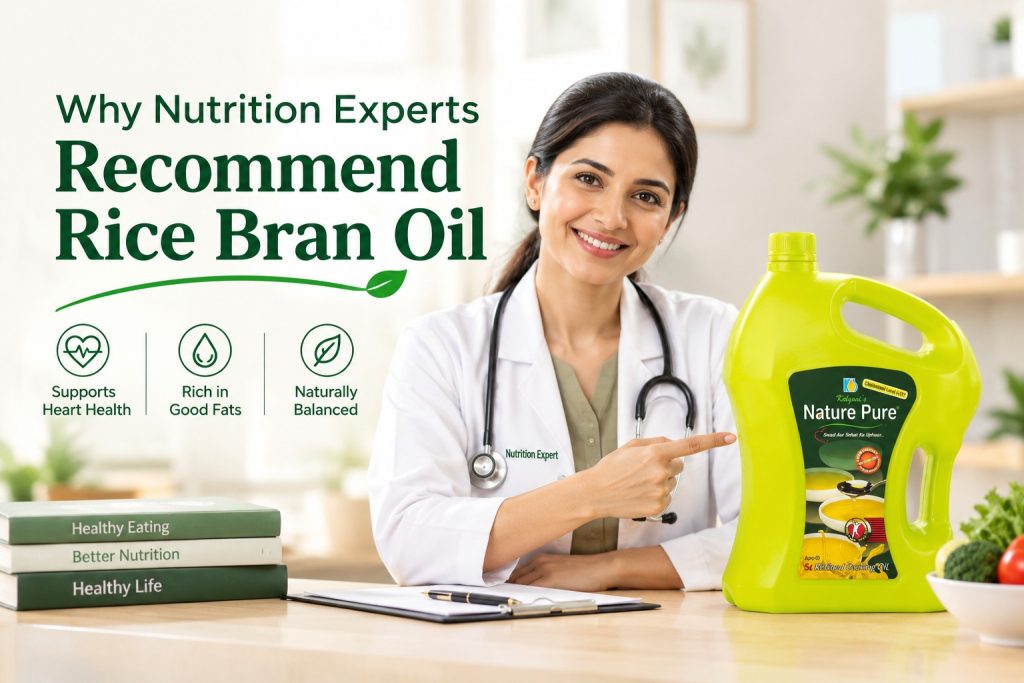
Rice Bran Oil is extracted from the bran, the nutrient-rich outer layer of rice. It contains a combination of monounsaturated and polyunsaturated fats, along with naturally occurring compounds such as Gamma Oryzanol and Vitamin E compounds. These nutritional characteristics have made rice bran oil a subject of interest in food and nutrition research.
But why do nutrition professionals consider it a potential option for everyday cooking? What are the key Rice Bran Oil benefits, and how should you choose a quality product?
Let’s explore the facts and understand how Nature Pure Rice Bran Oil can fit into a balanced cooking routine.
1. What Makes Rice Bran Oil Different?
Rice Bran Oil is produced from the bran of rice grains. The bran contains several naturally occurring compounds, including fatty acids, phytosterols, Gamma Oryzanol and Vitamin E-related compounds.
Unlike oils that are predominantly high in saturated fat, rice bran oil contains a combination of unsaturated and saturated fatty acids. Its nutritional profile makes it one of the vegetable oils worth considering when planning a balanced diet.
However, no single cooking oil provides every nutrient the body needs. A healthy diet depends on the overall quality of food, the variety of fats consumed and the quantity of oil used.
The key takeaway: Rice Bran Oil can be a practical cooking option, but it works best as part of a varied and balanced diet.
2. Rice Bran Oil Contains Unsaturated Fats
One of the reasons Rice Bran Oil attracts nutritional interest is its fatty acid composition.
It contains two important types of unsaturated fats:
- Monounsaturated fatty acids (MUFA): Found in several plant oils and foods, these fats can form part of a heart-conscious dietary pattern.
- Polyunsaturated fatty acids (PUFA): These include essential fatty acids that the body needs from dietary sources.
Replacing some foods high in saturated fat with unsaturated-fat sources can help improve blood cholesterol levels. The benefit depends on what the oil replaces and how the overall diet is structured.
For everyday cooking, Rice Bran Oil offers a way to include unsaturated fats in meals such as sautéed vegetables, curries and other home-cooked dishes.
3. Gamma Oryzanol: A Naturally Occurring Compound
One of the best-known compounds associated with Rice Bran Oil is Gamma Oryzanol.
Gamma Oryzanol is a mixture of compounds naturally found in rice bran oil. It has attracted scientific attention because of its antioxidant properties and its potential role in lipid metabolism.
Researchers have investigated rice bran oil and its components in relation to blood lipid profiles. Some clinical studies and research reviews have reported improvements in certain cholesterol measures, although results depend on the study design, participants and intervention.
It is important to understand that these findings do not mean every rice bran oil product will produce the same effects. Nor should cooking oil be considered a treatment for high cholesterol.
For consumers, Gamma Oryzanol is one of the nutritional features that makes Rice Bran Oil an interesting choice among everyday cooking oils.
4. A Source of Naturally Occurring Vitamin E Compounds
Rice Bran Oil contains Vitamin E-related compounds, including tocopherols and tocotrienols. These compounds have antioxidant functions and help protect cells from oxidative damage.
The actual amount of these compounds can vary according to the rice bran, extraction method, refining process and final product.
This is why it is useful to consider both the oil’s natural composition and the manufacturer’s quality standards when choosing a cooking oil.
Remember, the presence of Vitamin E compounds does not automatically make an oil a complete source of Vitamin E for your daily nutritional needs. A varied diet remains important.
5. Can Rice Bran Oil Be Part of a Heart-Conscious Diet?
Many consumers search for Rice Bran Oil for heart health because of its unsaturated fats and naturally occurring bioactive compounds.
Scientific research has examined whether consuming rice bran oil may influence blood cholesterol levels. A systematic review and meta-analysis published in 2021 reported reductions in total cholesterol, LDL cholesterol and triglycerides across the trials included in that analysis. However, research findings should be interpreted carefully because studies vary in duration, design and participants. Read the research on PubMed.
For everyday dietary choices, the wider principle is more important than any single ingredient: replacing some saturated fats with unsaturated fats can support healthier blood lipid levels.
A heart-conscious lifestyle also includes:
- Eating a variety of vegetables, fruits, whole grains and pulses.
- Including appropriate sources of protein.
- Limiting excess salt, added sugar and highly processed foods.
- Staying physically active.
- Using cooking oil in moderation.
Rice Bran Oil can contribute to this overall pattern, but it cannot independently prevent heart disease or replace medical advice and prescribed treatment.
6. A Versatile Choice for Everyday Indian Cooking
A healthy cooking oil should fit your everyday kitchen routine. Rice Bran Oil is used for a variety of cooking applications, depending on the product specifications and the cooking method.
It can be considered for preparing:
- Everyday sabzi and vegetable dishes.
- Dal and home-style curries.
- Sautéed vegetables and stir-fries.
- Selected shallow-fried and fried preparations.
- Snacks and family meals.
Some rice bran oils are valued for their relatively high smoke point, which can make them useful for different cooking applications. However, the actual performance depends on the oil’s formulation and quality.
Avoid heating any oil until it smokes. Repeatedly reheating or reusing oil, especially after deep-frying, can also affect its quality.
For regular meals, methods such as sautéing, steaming, grilling and baking can help reduce reliance on deep-frying.
7. What Should You Look for in a Quality Rice Bran Oil?
Choosing a healthy cooking oil involves more than looking at the product name or a promotional claim. Here are a few practical checks to make before purchasing.
Check the product label
Read the ingredient information, nutritional panel, storage instructions and best-before date. Make sure the product is suitable for your intended cooking use.
Understand the refining process
Refining helps prepare edible oil for consumption, but processing methods can affect minor compounds naturally present in the oil. If a product is labelled physically refined, check the manufacturer’s product information to understand its specifications.
Look for quality and food-safety information
Choose a product from a manufacturer that provides clear labelling, traceable business details and applicable food-safety information.
Choose the right pack size
A smaller pack may suit a household with limited oil consumption, while larger packs may be more practical for families or commercial kitchens. Choose a size you can store properly and use within the recommended period.
Avoid exaggerated health claims
Phrases such as “cures cholesterol,” “prevents heart disease” or “guaranteed health results” should not be the basis of a purchase decision. A credible product description should explain its verified features without promising medical outcomes.
8. Why Choose Nature Pure Rice Bran Oil?
At Nature Pure, the focus is on bringing Rice Bran Oil to everyday kitchens in practical pack sizes for household and commercial use.
Nature Pure Rice Bran Oil can be considered by consumers looking for a versatile cooking oil with a combination of unsaturated fats and naturally occurring rice bran compounds.
When selecting your pack, review the current label and product information for details about refining, nutritional composition, storage and intended use.
Whether you are preparing daily meals for your family or cooking in a commercial kitchen, a good cooking routine starts with choosing a suitable product, storing it correctly and using the right amount.
Explore the Nature Pure product range to find a pack that suits your cooking requirements.
9. How Much Rice Bran Oil Should You Use?
Even a cooking oil with a favourable fatty acid profile contributes calories to your diet. Therefore, the amount you use matters.
The Indian Council of Medical Research–National Institute of Nutrition recommends using oils and fats in moderation and including a variety of oilseeds, nuts and other foods to meet nutritional needs. Its dietary guidelines also encourage cooking methods that do not rely excessively on frying. Read the ICMR-NIN Dietary Guidelines for Indians, 2024.
For practical everyday use:
- Measure oil instead of pouring freely from the bottle.
- Consider oil used across all meals, not just one dish.
- Avoid unnecessary deep-frying.
- Do not repeatedly heat and reuse frying oil.
- Follow individual dietary advice from a qualified healthcare professional when needed.
The right quantity varies with age, energy needs, activity level and overall diet, so there is no single amount suitable for everyone.
10. Is Rice Bran Oil the Best Cooking Oil?
There is no single cooking oil that is automatically the best choice for every person or every recipe.
Rice Bran Oil has a useful combination of unsaturated fats and naturally occurring compounds, but other oils also have their own nutritional characteristics. Olive, mustard, groundnut, sunflower and other oils can fit into different dietary patterns depending on their composition, quality, availability and intended use.
Rather than relying on the word “best,” compare the product label, fatty acid profile, cooking requirements and your overall dietary needs.
You can also vary your sources of dietary fat through appropriate oils, nuts, seeds and other foods, instead of relying on one oil for every nutritional benefit.
Conclusion: Make an Informed Choice for Everyday Cooking
Nutrition professionals generally look at the complete diet rather than recommending a single food or oil as a solution for every health goal. Rice Bran Oil stands out for its combination of unsaturated fats and naturally occurring compounds such as Gamma Oryzanol and Vitamin E-related compounds.
When used in moderation, a suitable quality Rice Bran Oil can be part of a balanced approach to everyday cooking. Product quality, correct storage, sensible cooking methods and the amount used all matter.
With Nature Pure Rice Bran Oil, make an informed choice by checking the product information and choosing a pack that suits your kitchen routine.
Healthy cooking begins with informed choices, balanced meals and mindful use of oil.
Frequently Asked Questions (FAQs)
1. Why do nutrition experts discuss Rice Bran Oil?
Rice Bran Oil contains monounsaturated and polyunsaturated fats, along with naturally occurring compounds such as Gamma Oryzanol and Vitamin E-related compounds. These characteristics have made it a subject of nutritional research.
2. Is Rice Bran Oil good for everyday cooking?
It can be suitable for everyday cooking when the product is appropriate for the intended use and the oil is consumed in moderation. A balanced diet and sensible cooking practices remain important.
3. Does Rice Bran Oil help lower cholesterol?
Some clinical studies and research reviews have reported improvements in certain blood lipid measures. Results are not guaranteed for every individual or product. Rice Bran Oil should not replace prescribed cholesterol medication or professional medical advice.
4. What is Gamma Oryzanol in Rice Bran Oil?
Gamma Oryzanol is a group of naturally occurring compounds found in rice bran oil. Researchers have studied its antioxidant properties and potential effects on blood lipid measures.
5. Is Rice Bran Oil suitable for frying?
Depending on its specifications, Rice Bran Oil may be used for several cooking applications, including frying. Avoid overheating oil, allowing it to smoke or repeatedly reusing it.
6. How do I choose a good Rice Bran Oil?
Check the label, nutritional information, manufacturer details, storage instructions, best-before date and applicable food-safety information. Prefer transparent, verifiable product information over exaggerated health claims.
7. Can I use Rice Bran Oil as my only cooking oil?
You can choose an oil that suits your needs, but no single oil is nutritionally perfect for everyone. Consider your overall diet, cooking habits and advice from a qualified nutrition professional.
8. Is Nature Pure Rice Bran Oil suitable for family cooking?
Review the current Nature Pure product label and specifications to confirm suitability for your intended cooking needs. Use cooking oil in moderation as part of a balanced diet.
